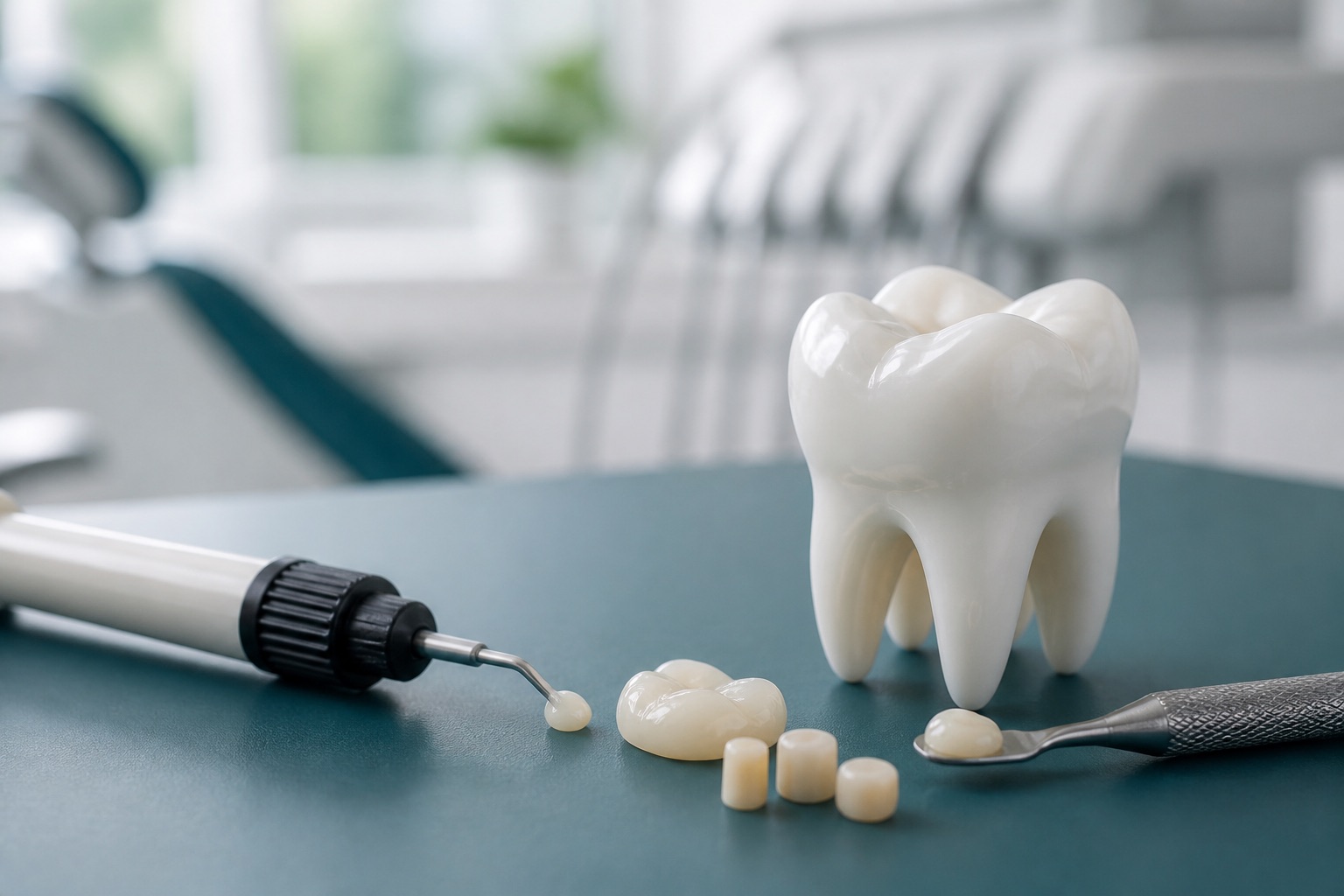
Most of the filling materials used today only adhere to the tooth, they do not adhere. For this reason, dentists take some conservative precautions when filling. These precautions are made possible by the preparation of special retaining cavities. As a main rule when filling, a good cavity is prepared; and with the filling to be placed on the tooth, attempts are made to restore its natural shape before decay.
When choosing the filling material, dentists consider whether the material can withstand chewing pressure on the back teeth; to be as unnoticeable as possible on the front teeth; They take into consideration that it does not harm the teeth and dental pulp. Now we would like to give you information about a few types of fillers:
Amalgam Fillings (Metal Fillings)
It is a very durable and economical filler; but its appearance is not aesthetic. It is prepared by mixing a powder consisting of 70% silver, 23% tin, and a small amount of copper and zinc with mercury. The mixture is piled into the cavity prepared by the dentist and the filling hardens in a few hours. It is the best filling material used today, especially for molars.
Composite Fillings (Tooth-Colored Fillings)
A composite filling is a tooth-colored aesthetic material used to repair tooth decay, fractures or cracks. It is also known as a “white filling” or “light-cured filling.” It consists of a mixture of acrylic resin and glass or quartz particles and is hardened quickly with a special blue light.
Common uses
- Treating tooth decay
- Repairing fractured or cracked teeth
- Closing spaces between teeth (diastema)
- Lengthening worn teeth
- Aesthetic restorations in front and back teeth
Advantages
- Its tooth-colored appearance blends with natural teeth.
- Adhesive systems allow it to bond strongly to tooth tissue.
- It can often be completed in a single appointment.
- It may allow more healthy tooth tissue to be preserved.
- It contains no mercury.
Inlays and Onlays
Inlays are castings and fillings. After the measurement of the shaped cavity for the filling is taken, it is prepared from gold or porcelain in the laboratory and glued to the tooth. They require special technique and very precise work. In onlays; The tissue loss in the part of the tooth visible in the mouth is more extensive. At least one or more protruding parts are damaged.
The information contained in the site content is for support purposes. It is not a substitute for the physician examining the patient for medical purposes and making a diagnosis.