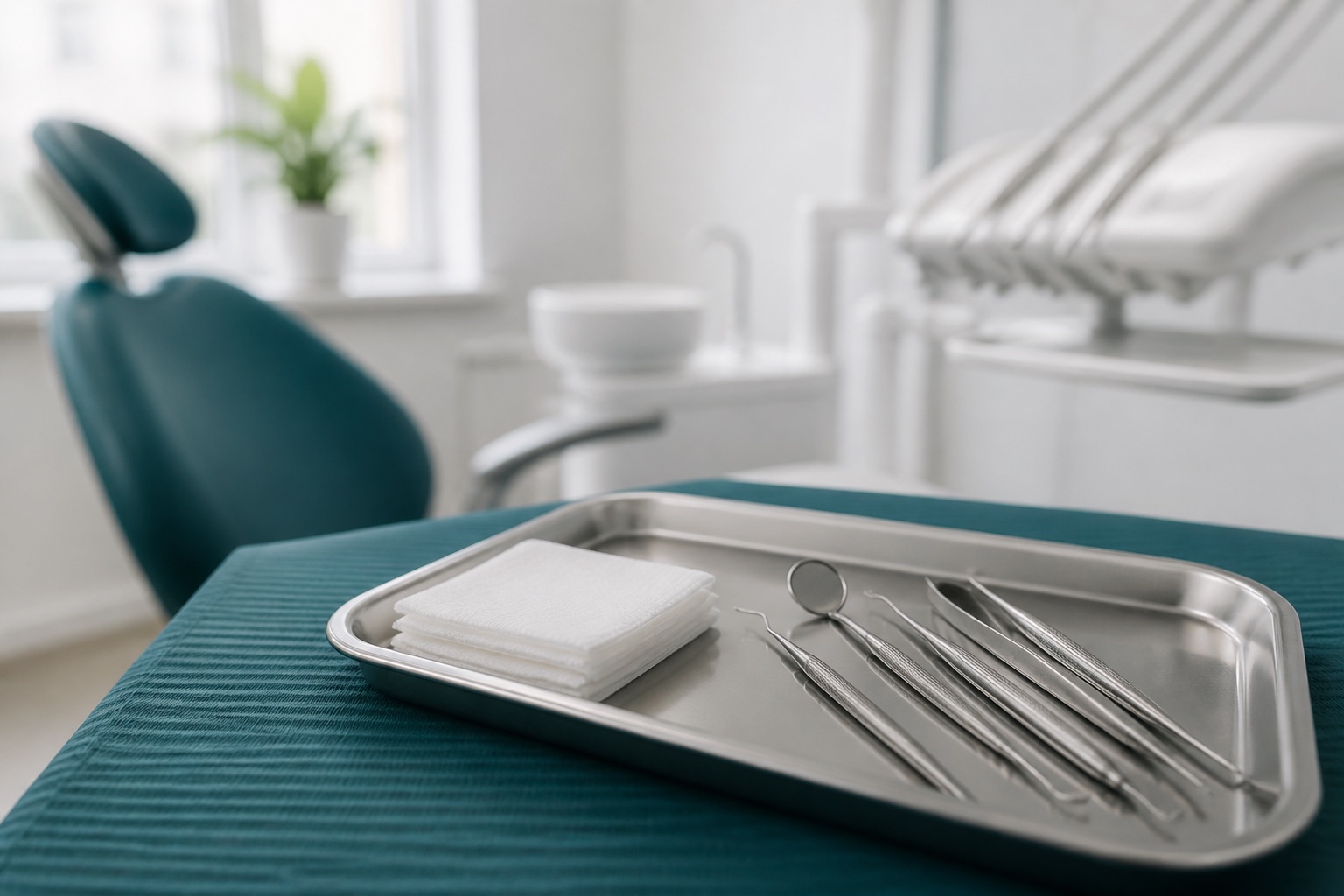
Today, thanks to the contributions of scientific and technological progress to dentistry, the primary aim is to treat the tooth and keep it in the mouth, but in some cases, tooth extraction is resorted to for the protection of patient health or treatment planning. We can summarize these situations as follows:
- Teeth that cannot be saved with treatment due to advanced decay and material loss.
- Teeth that are broken as a result of impact and cannot be treated.
- Abscessed teeth that cannot be saved despite root canal treatment.
- Loose teeth due to advanced gingivitis.
- Milk teeth that do not fall out on time.
- Teeth that cause problems due to excessive position changes (rotation, tipping, etc.).
- Teeth in cysts or tumors.
- Teeth that are not fully erupted (buried) and cause problems.
- Due to lack of space, some teeth may be extracted even if they are problem-free to assist orthodontic treatment.
Things to consider after tooth extraction
- The tampon placed on the extraction wound should be kept for half an hour.
- After this tampon is removed, no tampon should be inserted again unless necessary, and care should be taken not to disrupt the clot formed.
- The mouth should not be rinsed with water.
- After the shooting, nothing should be eaten for about two hours, after this period, warm foods should be preferred and very hot or cold foods should be avoided.
- No smoking should be avoided for 24 hours. Smoking may cause the clot to break down and cause inflammation of the wound. This condition, called dry socket, causes pain for a long time.
- Alcohol should not be consumed for 24 hours.
- The extraction site should not be touched in any way, and the wound area should not be sucked or spat out.
- The injured area should not be used for 24 hours.
- If pain occurs, a medication other than aspirin should be preferred, and if possible, a physician should be consulted.
- The shooting location must be kept clean.
- Food residue filling into the wound should be prevented. 24 hours after extraction, the area should be gently brushed with a soft toothbrush. In the meantime, warm salt water gargling can also be used.
- It is considered normal for bleeding to last 6-24 hours in case of slight leakage.
- However, if there is excessive bleeding or this period has been exceeded, a dentist should be consulted.
- Likewise, in cases of long-lasting pain and swelling, the physician should be notified.
- In case of bleeding that continues in the form of leakage, a soaked tea bag can be wrapped in gauze and placed on the wound. Tamponing in this way for a while may be beneficial due to the blood-stopping properties of some substances in the tea.
The information contained in the site content is for support purposes. It is not a substitute for the physician examining the patient for medical purposes and making a diagnosis.