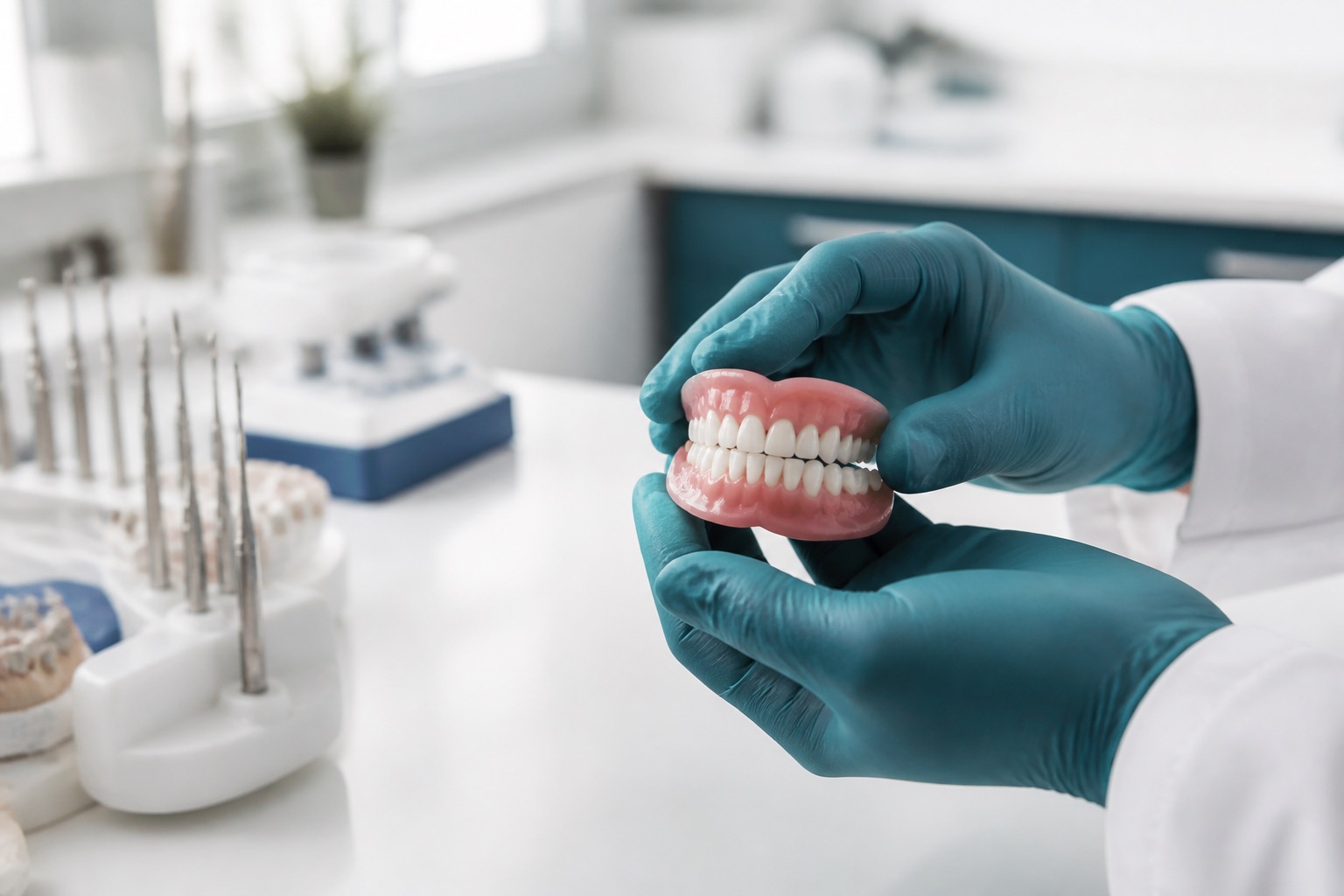
Complete dentures are made for those who have lost chewing function due to the absence of natural teeth. It is a fact that good chewing is very important in the digestion of nutrients. In addition to regaining chewing ability, it will also help your denture look beautiful. Like everything else, it will take some time to learn how to use your prosthesis. If you are determined and approach the issue positively, after a while you will see that you can use your prosthesis comfortably.
Problems Encountered at Startup
Your new denture will feel foreign and large in your mouth. A feeling of fullness will be felt in the lips and cheeks. No matter how thin the dentures are made, they will feel swollen. The lower denture will move more and become dislodged. Getting used to the lower denture is more difficult and takes longer than getting used to the upper denture. In the first days, there may be an increase in the amount of saliva as a result of stimulation of the glands, but this will pass over time. No matter how much care is taken in the construction of the prosthesis, as it fits into the soft tissues and moves during function, there may be dents in some places. The patient must come on the days recommended by the dentist and corrections must be made to the prosthesis. It is wrong for the strokes to be removed by the patient; you may exaggerate the problems. You must have used your dentures for at least 8 hours before coming to the dentist to have the affected areas removed. This period allows the damaged areas to be seen. Within a few weeks, you will witness that these problems will decrease on their own as the tissues in your mouth adapt to the prosthesis. It is very rare to have no complaints after the prosthesis is installed.
Eating and Chewing Food
The dentist must see the patient 24 and 48 hours after the full dentures are installed. When you first start using your prosthesis, you should start with soft foods. Eat food by dividing it into small pieces and chewing slowly. When eating, chew using both sides of your jaw and back teeth. Do not try to eat very hard and difficult to chew foods until you have gained experience in using the prosthesis. When the patient's prosthesis is first installed, it is not possible for the prosthesis not to move while drinking water.Learning to chew takes time. For example: It is difficult to feel the bone of meat. It would be better to remove the bones of foods such as chicken, fish and meat on your plate and then start chewing them. It takes at least 6-8 weeks to be able to eat normally with full dentures. With full dentures, the front teeth should never be bitten, especially in the first weeks. This causes the back parts of the prosthesis to move away from the tissues. Lip and cheek biting may also occur in the beginning. Eating with lips closed should be tried. Your chewing force with your denture is 1/3 to 1/6 less than with natural teeth.
Speech
It may take some time. Reading out loud should be practiced. Words that cannot be pronounced correctly should be repeated and tried to be normalized. Initially, your prosthesis may move out of place in your mouth when you laugh or cough. Slowly clench your teeth and swallow to make it fit again.
Appearance
When you first start using the prosthesis, the appearance of your face may seem different. Once your cheek and lip muscles adapt to the prosthesis, your appearance will return to normal. If you look in the mirror, you will notice that you look younger with your prosthesis. The sagging of your cheeks and lips will be corrected with your prosthesis. The more you act relaxed, the more natural you look. The appearance of artificial (denture) teeth is also extremely beautiful and healthy.
Use of the Prosthesis
Follow your dentist's recommendations about how long you will use your prosthesis in a day. Once you get used to using your prosthesis, remove it at night. Thus, your oral tissues will rest and your oral health will be protected. When dentures are removed at night, they should be left in water. It should be kept in a glass and out of reach of children. Young people who must not remove their dentures at night should rest their oral tissues during the day and at a suitable time. The life of the prosthesis is 4-5 years.
Prosthesis Care
For a healthy mouth, it is necessary to clean food residues from your denture after every meal. Brush every part of your denture with the denture cleaning brush. Do not use too much force. You can use substances such as toothpaste or Active cleaning tablets during the cleaning process. Definitely use chlorac, salt spirit etc. to clean it. Do not use substances such as. Never put your prosthesis in hot water.. Do not make decisions on your own regarding issues that concern your health. If your denture is loose or needs repair, consult your dentist. Brush the inside and outside of your dentures every day with a suitable denture-cleaning brush.
Regular Check
Patients using full dentures should be checked at regular intervals, just like people with natural teeth. The tissues under the prosthesis may change depending on various factors. This situation is closely related to the general health of the patient.
Over time, your prosthesis loses its compatibility with the tissues and may cause damage to the tissues before you realize this. Various lesions may occur in the mouth, related or unrelated to your denture. Therefore, you should be examined by a dentist at least once a year. The success of your new dentures depends on you as well as your dentist. With a patient and positive approach, you can be one of the millions of people who use prosthesis comfortably.
The information contained in the site content is for support purposes. It is not a substitute for the physician examining the patient for medical purposes and making a diagnosis.